Translate

lunedì 11 agosto 2014

Teatro Valle occupiers quit the theater, but don't go far

Activist artists want to run the theater jointly with the city


(ANSA) - Rome, August 11 - Theater artists and staff who three years ago occupied Rome's oldest theater to save it from privatization left the historic Teatro Valle on Monday but didn't go far, camping out in the foyer to keep up the pressure on city authorities to negotiate with them on the future of the beloved institution.

A former opera house built in 1726, the Valle was occupied by a group consisting of actors, musicians, directors, technicians, and creative staff in June 2011 amidst rumours that it was to be privatised and would lose its artistic independence. As part of sweeping budget cuts to the arts first carried out by the center-right administration of Silvio Berlusconi, the government had recently shut down the Ente teatrale italiano, a State organization to promote Italian theater which partially supported the Valle, leaving it unprotected. During the three years of its occupation, the Valle activists programmed an uninterrupted stream of free classes, seminars, film screenings, concerts, and plays by leading Italian and international artists.

The former occupiers have a list of demands they want to discuss with the city. These are for the theater to be a place to experiment with innovative models of cultural management, for the theater to be run by "a community of artists and theater workers, with the participation of citizens at large", and for the city and the Foundation to come up with a schedule of repairs and renovations together, "in order to keep the theater open to citizens as much as possible". The activists on Monday built a stage outside the theater they just quit, where they will carry on with their artistic work while waiting for the city to enter into talks on the future of the theater. 

Cuba to showcase its culture at Milan Expo 2015

Havana says it will promote itself as high-end tourist spot


(ANSA) - Milan, August 11 - Cuba says it will showcase its culture and promote its tourism at Milan Expo 2015. According to the island's Chamber of Commerce, Cuba will dedicate its pavilion to nutrition and the country's food production. "Expo can offer many opportunities for Cuba," said Italy's ambassador in Havana Carmine Robustelli. Havana's Chamber of Commerce hopes to use the world's fair to promote its food production potential in the wake of new legislation in Cuba facilitating foreign investment.

The 250-square-metre Cuban pavilion will be designed to seduce visitors with its culinary tradition while it "strengthens the island's image as a high end tourist destination". Agricultural biotechnology, biodiversity and art will also be among the major attractions of the pavilion. Milan Expo begins next May and continues through six months. 

Italy must apply reforms, up to Rome how, says EU

Commission responds to Renzi's FT interview


(ANSA) - Rome, August 11 - The European Commission said Monday that Italy needed "effectively implemented structural reforms... to create the conditions for growth and employment". A commission spokesperson said that the EC has given Rome recommendations on reforms that Italy has committed to, adding that the "implementation of the reforms is a question that regards the (member) State". The spokesperson was commenting on Italy's situation after Premier Matteo Renzi said in an interview with The Financial Times that it was up to his government to decide on the country's reform path, not the EC or the European Central Bank. 

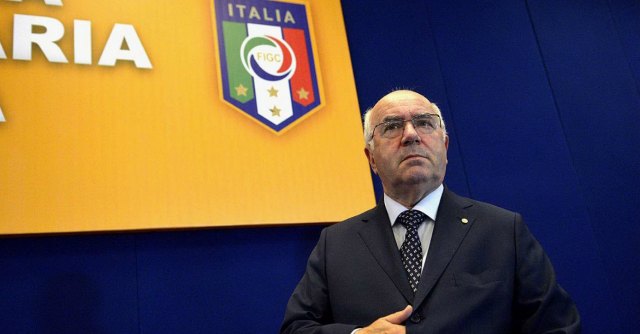
Tavecchio elected new Italian soccer federation chief

71-year-old beat Albertini despite banana racism row


(ANSA) - Rome, August 11 - Carlo Tavecchio was elected the new president of the Italian Soccer Federation (FIGC) at an assembly in Rome on Monday despite having caused a huge racism row with his comments about "banana-eating" non-EU players. The 71-year-old prevailed in the third ballot with 63.3% of the votes. "I will be everyone's president, especially those who expressed their dissent," a tearful Tavecchio said upon hearing the news. "I will try to improve my rough and unglamorous ways, as someone once rightfully said". The head of Italy's amateur soccer leagues, Tavecchio had a majority of the votes of the FIGC delegates, despite opposition from many Serie A sides, including champions Juventus and fellow giants AS Roma.

Tavecchio sparked the racism storm last month when calling for tighter restrictions on non-EU players in Italian soccer. "In England, they identify the players coming in and, if they are professional, they are allowed to play," Tavecchio said. "Here, on the other hand, we get 'Opti Poba', who was eating bananas until recently and then suddenly becomes at starter with Lazio".

Italian soccer has a big problem with racism on the terraces, so many, including top players such as Roma and Italy midfielder Daniele De Rossi, argued Tavecchio now lacks the credibility to fight this problem. A member of Premier Matteo Renzi's centre-left Democratic Party (PD) said last week that a petition calling on Tavecchio to drop his bid has attracted over 26,000 signatures. The banana comments hit the headlines worldwide and international soccer's governing body, FIFA, called on the FIGC to investigate them. But the support of the delegates from Italy's lower and amateur leagues was unmoved by the storm.

The FIGC top job is vacant after Giancarlo Abete quit following Italy's group-stage exit from the World Cup in June If elected, one of Tavecchio's first tasks will be to find a new national team coach after Cesare Prandelli - now at the helm of Istanbul side Galatasaray - quit on the same day as Abete. Overcoming the divisions that emerged during the FIGC presidential campaign to solve Italian soccer's many deep-rooted problems - including crowd violence, poor facilities and the declining international competitiveness of its clubs - will be more difficult. 

Laid-off Alitalia staff to get 'new jobs immediate

Union says don't forget 'human wounds' created by cuts


(ANSA) - Rome, August 11 - More than half of the Alitalia employees laid off under the airline's deal with Etihad Airways "will be relocated immediately" to new positions, says Transport Minister Maurizio Lupi. Of the 2,250 job cuts the Abu Dhabi-based demanded under the deal that will see it invest about 560 million euros for a 49% stake in Alitalia, 1,250 will be re-employed right away, said Lupi.

The agreement "is good news," said the minister, whose government had pressed hard for the deal that Lupi has said was essential to keeping the money-losing Italian carrier alive. Lupi said that of the 1,250 workers to be immediately employed, about 200 will be aircraft maintenance workers in Italy.

According to published reports, Alitalia staff who agree to resign must tell the airline by September 10 and will receive a 10,000 euros bonus. Some others will be employed by Etihad, as well as third-party companies and suppliers to the airlines. While the deal, which was formally signed Friday, will keep Alitalia in the air, it also offers Etihad a stronger foothold in Europe and access to lucrative routes. At the signing ceremony, Etihad Chief Executive Officer James Hogan said that the airline intends to invest as much as 1.758 billion euros in Alitalia over the coming years. "Our entry into Alitalia is to be partners," Hogan said after the pact was formally signed Friday by chief executive officers of the two airlines.

Lupi is also said to be working on an extension of a program that has assisted past Alitalia employees who were laid off and received redundancy payments. That program will expire in October 2015 and Lupi is reportedly working for an extension until 2018. The investment pact between Alitalia and Etihad was supported by most of the unions representing airline workers, and the lone holdout signed on the deal at the last moment. But remaining Alitalia workers are said to be concerned about their future, including fears they may be asked to transfer to work at Etihad's base in the United Arab Emirates.

Despite the good will surrounding the new deal at present, no one should forget the “human wounds" created by the layoffs as well as the "serious social repercussions", said the Secretary General of UGL union Geremia Mancini. Some workers took a bitter tone after hearing Hogan quip that he wants Alitalia to become "the sexiest airline in Europe". "Of course, we will be a more sexy company, (workers) are left with only their underwear," workers said.

Meanwhile, rumours continued to circulate about possible new leadership at Alitalia, with suggestions that Luca Cordero di Montezemolo, Ferrari's number one, could take the job of chairman but as a figurehead without daily operating authority. He has previously denied interest in the job. 

Renzi vows to respect EU rules as Moody's sees GDP dip

Italy won't be dictated to on reforms, Renzi tells the EU


(ANSA) - Rome, August 11 - Premier Matteo Renzi said Monday that Italy will not break the European Union's 3%-deficit-to-GDP limit even though his government's budget calculations have been hit by an economic slide back into recession. "I have absolutely no intention of breaking the 3% ceiling," Renzi said in an interview published Monday in the Financial Times. "We hope to have better [growth] figures in the second half and as a result will be at 2.9% [of GDP]. We will not break the 3% rule. It is…a matter of Italy's credibility and reputation, even if others do break it".

The premier went on to say that Italy is well aware it must undertake structural economic reforms, but that Rome will not have them imposed by the European Central Bank (ECB) or anyone else. His comments came after ECB President Mario Draghi said last week that uncertainly over reforms in Italy hampered foreign investment and was a big factor in the economy's poor performance.

Draghi's comments came after national statistics agency Istat announced Wednesday that the country has slipped into its third recession in five years as GDP dropped 0.2% in the second quarter after shrinking 0.1% in the first three months of the year. This means that the government's forecast of 0.8% growth this year - the basis for its budget calculations - is set to be off the mark. "I agree with Draghi when he says that Italy needs to implement reforms, but I will decide how we are going to go about them. Not the troika, not the ECB, not the European Commission," Renzi told the Financial Times. "I will undertake the reforms myself because Italy does not need anyone else explaining what to do". The troika is a committee made up of EC, the ECB and the International Monetary Fund that organises bailouts. Later on Monday, the EC replied through a spokesperson that while it has given a series of recommendations on reforms that Italy has committed to, "their implementation is a matter that regards the (member) State".

Also on Monday, Moody's ratings agency said it expects Italy's gross domestic product to drop by 0.1% in 2014, revising downward its previous forecast of 0.5% growth. The agency said Italy would not hit its target deficit-to-GDP ratio of 2.7% this year after the country returned to recession, adding that there is "significant risk" that the deficit will get worse.

Pope to bring message of peace to Asia during S Korea trip

Pope Francis will call for inter-Korean reconciliation during his trip to South Korea next week but is not expected to travel to the demilitarised zone, the Vatican says


VATICAN CITY — Pope Francis travels to South Korea this week with a message of peace for the divided peninsula on his first papal visit to Asia, where the Catholic Church is undergoing dramatic growth. The 77-year-old will fly into Seoul on Wednesday in a trip also aimed at making up for his predecessor Benedict XVI never visiting Asia during his whole eight-year papacy.
Vatican watchers say Francis will address the whole continent on the seven-day trip where the number of Catholics, although only 3.2% of the population, is rocketing. With the Roman Catholic Church dogged by increasing secularism in the West, “it’s a chance for the pontiff to flash a thumbs-up to a region upon which Catholicism is increasingly reliant”, said Vatican expert John Allen, who writes for the Boston Globe. In January, the pope will return to Asia on a trip to Sri Lanka and the Philippines—the region’s largest Catholic country—to nurture the burgeoning number of faithful and would-be clerics from China to India, Myanmar and Vietnam.
As a young man, Francis dreamed of becoming a missionary in Japan, where Catholics in the 18th and 19th centuries kept their faith alive without the help of priests, who had been expelled or murdered by the imperial government. In South Korea, he will preside over a beatification ceremony for 124 Korean martyrs and is expected to use his speech to warn of a recent escalation in anti-Christian persecution from Afghanistan to Iraq, Syria and Somalia.
In the last census to include religious affiliation in 2005, close to 30% of South Koreans identified themselves as Christian. The majority are Protestants, but Catholics are the fastest growing group with around 5.3 million adherents—just over 10% of the population. In North Korea, the Church is only allowed to operate within the confines of the state-controlled Korean Catholics Association (KCA). The country is repeatedly ranked worst for oppression of Christians by international watchdogs. The pope will hold a mass in Seoul’s cathedral for reconciliation between the two Koreas which remain technically at war because the 1950-53 conflict ended in a ceasefire rather than a peace treaty.
Seoul’s Cardinal Andrew Yeom Soo-jung, who crossed into North Korea for a historic one-day visit in May, said he hoped Francis would bring about “a great miracle” for dialogue between Korea’s Communist and capitalist halves. Reports that the pope may pray at the demilitarised zone between the two Koreas—in an echo of his impromptu stop at Israel’s separation wall during a trip to Bethlehem earlier this year—were ruled out by the Vatican. However, spokesman Federico Lombardi said “the pope is always capable of surprises”. Religious watchers have also speculated that Francis might take the chance to travel on to Beijing in a bid to ease a bitter feud between the Church and China’s Communist regime, which has its own state-controlled Catholic Church.
During the visit to South Korea, the first by a pope, he will meet relatives of the victims of the Sewol ferry, which sank in April with the loss of some 300 lives—most of them children. He will also meet Korean women forced into sex slavery for Japanese troops during World War II, invited by organizers to attend the pope’s August 18 mass.
The pontiff, a champion of the weak and downtrodden, will visit a center for the handicapped and is also expected to reach out to those left behind by the country’s rapid economic growth, repeating his famous call for “a poor church for the poor”. “The Korean Church is learning to pay attention to the poor, but today there is still a risk of it coming across as a church of the rich, for the rich,” Vincenzo Bordo, a lay missionary in South Korea, told the Vatican Insider website. Many hope that the pope’s visit will act as an impetus” for change, he said.