Translate

mercoledì 18 giugno 2014

Ken Loach, Fo sign against Valsusa High Speed Train line

VIPs back no-global appeal to 'Permanent People's Tribunal'


(ANSA) - Turin, June 18 - UK director Ken Loach and Nobel literature laureate Dario Fo are among intellectuals supporting an appeal filed Tuesday to a Permanent Tribunal of Peoples (TPP) against the high-speed TAV train line being built through the Alpine Valsusa area, organisers say.

Also among those signing the protest organised by the Valsusa Counter-observatory movement headed by retired magistrate Livo Pepino were French economist Serge Latouche, sociologist Luciano Gallino and designer Ellekappa. So-called 'No-TAV' protesters have staged demonstrations for years to try and halt the work on the high-speed rail connection in the Alpine pass, arguing that it will upset the ecological balance in the area.

The appeal is believed to be the first of its kind in Italy or Europe to the TPP, an independent body that issues opinions and rulings on cases of suspected systematic violations of human rights. "The situation in Val Susa raises fundamental questions of democracy and the respect for human rights," Pepino said. 

Quasimodo, Renzo Piano, 1914-2014 asked of 'bac' candidates

Hermetic poet, Pritzker Prize winner in school-leaving exam


(ANSA) - Rome, June 18 - Hermetic Nobel Prize-winning poet Salvatore Quasimodo and Pritzker Prize-winning architect Renzo Piano were among the options that emerged for those sitting the maturita' school-leaving certificate or baccalaureate Wednesday. Quasimodo, who comes at the end of the syllabus and is seen as a hard option, had not come out for 12 years.

The question on Piano asked about his and others' efforts to revamp urban peripheries. Other options included a comparison between 1914 and 2014, focusing on the ills and violence of the 20th century. 

Soccer: Italy eye early passage against Costa Rica

Buffon expected to return for second Group D match


(ANSA) - Rome, June 18 - Italy are looking to close in on a place in the knockout round of the World Cup in Brazil on Friday when they face Costa Rica in their second Group D game. The Azzurri are upbeat after their impressive 2-1 win over England on Saturday, a performance that led former national-team coach Marcello Lippi to say he could see the same spirit that his squad had on the way to winning the 2006 World Cup.

Victory over Costa Rica in Recife will secure Italy's passage for the next round with one game to spare if Uruguay fail to beat England on Wednesday. If Uruguay, who lost 3-1 to Costa Rica on their opener, do beat England, Cesare Prandelli's men would need a draw in their final game - against Uruguay in Natal next Tuesday - to be certain of progressing. "I hope we'll go through to the next round with the match against Costa Rica," Italy midfielder Daniele De Rossi said. "Uruguay and England play the day before and the situation will be clear. We'll have the chance to qualify, either mathematically or virtually".

There is optimism that captain-goalkeeper Gianluigi Buffon will be back for the Costa Rica game. Buffon, 36, has returned to training after missing the England match with an ankle sprain. Even if he doesn't return, the Azzurri should be in good hands anyway with Salvatore Sirigu, who played well in goal against England There is speculation Prandelli may make some changes in defence, the one department that had some wobbly moments against the English.

Gabriel Paletta is expected to be dropped at centre back. Pundits expect Prandelli to replace him with Leonardo Bonucci or reorganise the backline, shifting Giorgio Chiellini across from left back, bringing Ignazio Abate in at right back and moving Matteo Darmian from the right flank to the left. Left back Mattia De Sciglio, who missed the England match with a thigh-muscle problem, looks likely to stay on the sidelines. The boss is also thought to be considering resting midfielder Marco Verratti, who missed several days of training last week with flu, and selecting Thiago Motta in his place. 

Men's wear goes 'wild' at Pitti Uomo

With tropical prints and flowers


(ANSA) - Florence, June 18 - Men's wear spring-summer 2015 collections walk on the wild side of fashion at the 86th edition of Florence's Pitti Uomo trade fair wrapping up Friday. If formal clothing has rediscovered the undying allure of men's staples with a twist, from waistcoats to the slim-fitting blue blazers famously donned by Italy's 39-year-old Florentine Premier Matteo Renzi, casual clothes will be all about tropical prints, flowers and colonial styles when temperatures start soaring next year. Angelo Nardelli 1951 vied for a 1970s look with a collection dominated by flower patterns on both jackets and pants. Paolo Pecora Milano also dived into the botanical look with tiny flowers on its 1950s-inspired ties and embossed on suits, jackets and pants.

Marches tailor Lardini embraced next summer's soaring horticultural fecundity with beautiful blooms on its most elegant waistcoats. From blooming Western gardens to Caribbean sunsets, fashion savvy men next year will also be parading shirts, T-shirts and shorts with a tropical inspiration. Palms, lush undergrowth, hibiscus flowers and glimpses of beaches and waterfalls are all over collections - from jackets to jeans. Colmar Originals went for flowers and hibiscus to decorate the lining of its jackets while Italian shirt-makers Webb & Scott vied for the Hawaii spirit along with hip artisan shoemakers Raparo.

PT 01 - Pantaloni Torino launched a new line of chinos, the Fiji, paying homage to the exotic islands with a color palette of beiges and browns to give its pants a lived-in, discolored look. A cult brand of the 1980s, Mauna Kea, and Florence's iconic jeans manufacturers Roy Roger's went for beach couture hailing West Coast surf culture and East Coast glamour with flowers and printed beach photos. And the exotic hype is stretching from head to toe at Pitti Uomo.

Men next summer will be able to step under the sun with a flower-printed Stetson hat on their head and their feed clad in Gallo's Reef socks, hailing coral barriers, inside tropically inspired sneakers. Indeed the sneakers elevated to fashion must by top designers and trend setters like Marc Jacobs and Hedi Slimane are one of the highlights of this Pitti Uomo edition. Diadora heritage is nodding to the 1990s and this year's World Cup while D'Acquasparta pays homage to tennis and Wimbledon with vintage-looking sneakers.

Pantofola D'Oro is celebrating next year's rugby world cup and Italy's iconic Superga tennis shoes are bowing to a range of moods embracing Arabic-style patterns and the ever-popular skulls. And when the sun sets, if the summer breeze starts blowing and temperatures drop by a few degrees, De Praio has designed scarves for the boys with the omnipresent flower patterns and tropical prints. Elegance also has an exotic touch at Brunello Cucinelli.

The luxury brand's spring-summer collection was inspired by three leading European capitals - Paris, London and Amsterdam - yet in a color palette echoing the shades of Asia and Africa. The youthful polish of Cucinelli's slim-fitting suits was enhanced by colonial and exotic nuances of beiges and blues with touches of saffron, curry and orange inspired by spices. And if menswear labels are eyeing faraway countries for inspiration, data released on the eve of Pitti Uomo by the federation of Italian fashion businesses Sistema Moda Italia, showed foreign markets are also very good for business.

Exports in 2013 registered 4.3% growth worth 5.3 billion euros for Italian menswear labels - helping the sector's revenues as domestic sales shrank 9.3% while Italy was struggling out of its longest and deepest postwar recession. Overall, Italian menswear was worth 8.5 billion euros in 2013. While growth across EU markets remained stable - up 1.4% - the 1,090 companies presenting their spring-summer collections at Florence's Forezza da Basso will be vying in particular for markets outside Europe which registered a 7.4% hike last year, led by South Korea with a 35% increase, China with 29.5% and Hong Kong with 18%.

Traditional markets also grew, notably the US up 2%, Russia up 1.2% and Japan, which registered a 0.7% increase. According to data released by Italian statistics bureau Istat, exports will keep growing this year with a 4.7% increase already recorded in the first two months of 2014 on the same period last year. 

Calabrian Mob the one with the most reach in Emilia-Romagna

'Ndrangheta infiltration in post-quake reconstruction contracts


(ANSA) - Bologna, June 18 - A law-enforcement meeting in Italy's Emilia-Romagna region on Wednesday found that the Calabria-based 'Ndrangheta mafia is the most infiltrated in this wealthy northern region, where it has caused a rise in financial wrongdoing and in the overall crime rate.

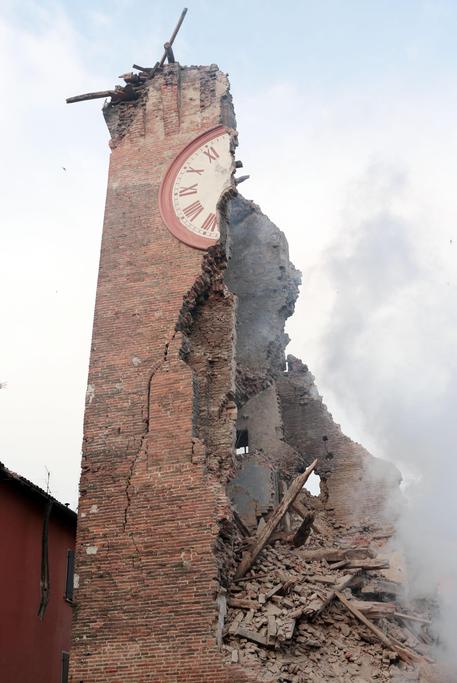
The meeting of prefects, police commissioners, Carabinieri military police, and tax police commanders found that 55 companies involved in reconstruction in the wake of two major earthquakes that killed 26 people and caused widespread damage in May 2012 have been black-listed after investigators found they had mafia links.

Of these, more than half had links with the 'Ndrangheta, and the rest were connected to the Sicilian Mafia and the Naples-based Camorra mafia. The 'Ndrangheta is believed to be the most powerful of Italy's mafias for its virtual stranglehold on the European cocaine trade. 

Nero's rundown Domus Aurea seeks sponsor

Hope for 'major firm' like at Colosseum says Franceschini


(ANSA) - Rome, June 18 - The fabled but rundown Golden House of Roman Emperor Nero is looking to the private sector to help fund a new multi-million-euro restoration project that should see it reopen after a 13-year closure in four years' time.

Culture Minister Dario Franceschini said Wednesday the legendary Domus Aurea would require yet another major restoration. He said the project, in which he hoped "a big private group will be involved", would cost an estimated 31 million euros. "The State will do its part but we'd really like to see the intervention of a major firm," as shoe king Diego Della Valle, the Tod's owner, has done for an ongoing restoration of the Colosseum, Franceschini said. The Domus has been shut since 2005 for work to make it more stable. After Franceschini's announcement, archaeologists said restorers will tackle the "very challenging" job by uprooting the 16,000-square-meter garden that now covers the Domus, and which is in a state of "serious" disrepair.

After that, they will excavate the underlying structures, strengthen the vaults, rebuild the pergolas, clean up the frescoes, and generally render the entire site safe for visitors. Then a landscape architect will redesign the garden to recreate its function at the time of Trajan, who built his baths atop the pleasure dome after Nero committed suicide in 68 AD. "It was a place for sport, chatting, and culture, and that's what we hope to restore it to," said monument director Teodora Filippi. The last reported occurrence of damage to the Domus was on March 30, 2010 when part of a ceiling in subsequent baths above it fell in.

The collapse occurred over what was once the central dome of the sprawling structure. Some 60 square meters of the baths built on top of the Golden House by Trajan, came down because of seepage from heavy rains.

At the time of the last collapse, then Rome mayor Gianni Alemanno said he was "very worried" about the state of the structure, one of Rome's most celebrated tourist attractions. The special commissioner for the site, Luciano Marchetti, said "more collapses were possible". The situation, he said, was "one of extreme alert". The Domus Aurea, built by Nero soon after the great fire in Rome in 64 AD, was closed after masonry fell from flaking walls and a high level of dangerous seepage was detected.

A recent project, still uncompleted, aimed to open up 2,600 square metres of the site. The top of the Domus on the Colle Oppio (Oppian Hill) is covered with parks, trees and roads whose weight and polluting effect are a constant threat. Archaeologists have also been trying to unearth more of the massive baths that Trajan built.

The golden palace of the ill-famed Nero (37-68 AD) first re-opened in June 1999 after 21 years in which it was Rome's best-kept secret - open only to art officials and special guests. Some five billion lire (2.5 million euros) were spent in refurbishing the visitable rooms filled with frescoes of weird animals like winged lions, griffins and tritons which led to the original coinage of the word 'grotesque', from the Italian word for cave (grotto). Architecturally, the Domus's 'piece de resistance' is the eight-sided Sala Ottagonale where Nero is supposed to have entertained his guests with his singing and lyre-playing on a rotating floor. According to Roman historian Suetonius, Nero surprised his guests by having marble panels slide back to shower guests with petals and perfume.

When the Domus was completed, it actually stretched for 50 hectares and covered most of the neighbouring Palatine and Celian hills as well. Nero was reputed to have remarked that finally he was beginning to be "housed like a human being". After Nero's suicide in 68 AD the Flavian emperors who succeeded him proceeded to bury all trace of his legacy.

The Flavian amphitheater, better known as the Colosseum, was built on the site of Nero's palace-side lake, while Trajan built his baths on top of the main part of the pleasure dome. The Colosseum is so-called because of the massive statue of Nero-as-Apollo, a colossus, that his successors dragged beside their own monument, after changing the head. The Domus also has a cherished place in Italian art history because Renaissance greats like Raphael and Michelangelo lowered themselves through the oculus on ropes to gaze at and copy the ancient wall drawings - a crucial stage in the full rediscovery of how to apply the laws of perspective to painting. 

EU youth employment summit may be moved from Italy

Security concerns in Turin may mean change of venue to Brussels


(ANSA) - Rome, June 18 - A European Union summit on youth unemployment planned for the northern Italian city of Turin next month may instead be moved to Brussels for security reasons, sources told ANSA Wednesday. First ministers from across the EU were scheduled to meet in the industrial city of Turin on July 11 to discuss high rates of youth employment across Europe.

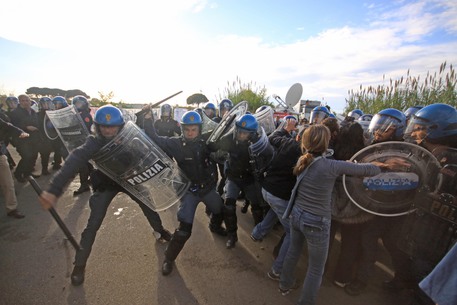
However, organizers are concerned about possible unrest in the industrial city of Turin, where groups have announced plans to disrupt the event. Turin has been the scene of violent clashes between police and demonstrators in the past, on issues ranging from social housing to opposition to a high-speed rail link between the city and Lyon in France, to rallies against austerity-driven tax hikes.