Translate

giovedì 18 settembre 2014

Divisions open in Renzi's party over Jobs Act

Article 18 change 'from Mars' says Bersani
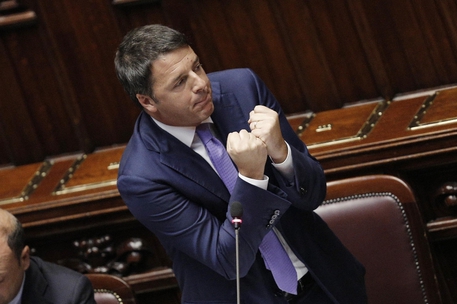


(ANSA) - Rome, September 18 - Premier Matteo Renzi's signature Jobs Act caused cracks in his Democratic Party (PD) Thursday because of a proposed change to a key element of job protection that has long been seen as a sacrosanct right by leftists and unions but a sacred cow by employers who say it stops firms growing and scares foreign investors.

The Jobs Act approved at committee stage progressively raises safeguards for new hires, slashes the plethora of temp contracts currently plaguing entry workers, establishes a minimum wage and universal unemployment benefit, and aims to make Italy's largely unused job centres effective tools for first-time job seekers and those who have lost their jobs. But it is the prospect of easier firings for new hires, because of a scaling back of Article 18 of the 1970 Workers' Statute, that poses the risk of a damaging split in the PD. Article 18, which critics have long depicted as a drag on employment, states that companies with over 15 employees that fire someone without just cause must give them their job back.

But an enabling law being presented to the Jobs Act seeks to change the regulations so that newly hired workers will not have the right to their jobs back, but will get compensation, if a court rules that they have been unjustly fired by their companies. Many past Italian governments have tried to amend Article 18 on the grounds that it makes companies reluctant to offer regular steady contracts, as it is so hard to get rid of a staff member once on the books. This has been blamed for high unemployment levels, especially among young people, and the fact that most new entrants to the job market are hired on freelance or temporary contracts that give few rights and low job security. Proponents of the change often claim that the clause has virtually become a dead letter, with only some 3,000 petitions filed each year. But that figure would be much bigger, experts say, if companies were not afraid of losing disputes. Liberal judges mostly find in favour of workers in most Italian regions, according to statistics.

Critics of the change argue that putting more workers out of a job is the last thing the economy needs with steepling jobless rates and flatlining consumption that had led to deflation. Unemployment in Italy has climbed to over 12% and more than four in 10 under-25s are out of work. In the past Italy's trade unions, backed by the PD and its Communist and Christian Socialist predecessors, have always managed to fend off attempts to change a regulation that they say guarantees a basic right. In 2012, then premier Mario Monti's plans to overhaul Article 18 were stymied in the first outright mutiny by the PD against his technocratic national unity government.

The revolt was led by Renzi's predecessor as PD chief, Pier Luigi Bersani, who backed a union alarm raised most loudly by the biggest and most leftwing federation, CGIL. On Thursday, amid union sabre-rattling about a general strike, Bersani again spearheaded the internal dissent against the reform. "It's absolutely indispensable that the government tells parliament what it intends to do in its enabling decree on the labour market because it's a serious issue," Bersani said. "I read intentions attributed to the government in the newspapers that look surreal to me. In some cases they describe Italy as it if were seen from Mars". PD Senator Francesco Scalia hit back on behalf of the government. "I don't find anything surreal about the intentions of the government in the enabling law," Scalia said. "What is very real are the unemployment figures".

But Bersani was not the only senior PD member worried about the reform plan. "Renzi's idea seems to be to cancel Article 18 and I don't agree with that," PD MP Cesare Damiano, the chair of the Lower House's labour committee, told financial daily Il Sole 24 Ore. "The party's position will have to be clarified at the meeting due to be held at the end of the month. I don't think it's right to give firms freedom to fire at this time of maximum unemployment". PD Chairman Matteo Orfini also expressed reservations. "The headlines of the Jobs Act can be agreed with, the details less so," said Orfini. "Mayor corrections are needed to the text". Despite the opposition - augmented by the leftist SEL and anti-establishment M5S parties storming off the committee - Labour Minister Giuliano Poletti said the government did not intend to amend its text, adding that now it was up to parliament to start examining it. The Senate labour committee OK'd the bill and Poletti said he was hopeful the reform could reach the floor of the Upper House next week. 

Genoa gears to host 54th Salone Nautico

More sailboats, Eataly among boat-show draws


(ANSA) - Genoa, September 18 - Boat lovers rejoice! Genoa is getting ready to host the 54th edition of the annual boat show, running this year October 1-6, a full day longer than previous editions. As always the fair - something of a hybrid business-to-business and consumer event - has something for everyone and for all budgets. Presenting the upcoming Salone Nautico in Milan on Thursday, organizers said some 750 exhibitors will display up to 1,000 sailboats, powerboats and mega-yachts. In particular, this year's show will be a real treat for sailboat lovers, with a record number of exhibitors and products, said Anton Francesco Albertoni, the president of the new company set up to organize the annual fair, one of the world's leading sector trade shows.

Exhibitors have up to 180,000 square meters of space to show off their wares, of which 100,000 square meters are in the water. Following the success of on-the-water "test drives" in previous editions, many more exhibitors will be offering prospective customers the possibility to try out boats and "experience the sense of freedom that being on the sea offers," said Alessandro Campagna, boat show organizer. A new layout has been created for the fair grounds this year allowing for 25% more sailboats and 50% more powerboats to be exhibited, Campagna said. The expansion of the "test drive" program, the show's extended schedule and the increased space dedicated to sailboats are some of the main changes organizers made to meet exhibitors' requests.

While fancy yachts and pretty models are certainly among the main draws for show visitors, its aim is to promote the industry and, especially, showcase the best of "made in Italy." In particular, said Massimo Perotti, the new head of boat industry trade group UCINA and chief executive of mega-yacht maker Sanlorenzo, the Salone aims to create export opportunities for the myriad small- and medium-sized enterprises which make up the backbone of the industry and which have suffered heavily since the global financial meltdown of 2008. In that year, the Italian nautical industry was worth some 6.4 billion euros, Perotti said, while today it is worth around 2.4 billion euros. The industry is again on a positive growth footing, Perotti said, but much depends on the economic outlook in Europe and on firms' success in internationalizing. Exporting for Italy's boat industry is - as for so many of the country's highly focused, small and often family-owned companies - a necessity. And the boat show is a key driver for companies looking to break out of Italy. Exports are important to firms of all sizes, including Sanlorenzo, with annual turnover of some 200 million euros. Perotti said that his company is looking to increase sales annually by 10 percent per year over the next three years and that all of the growth is expected to come form export markets, in particular the US, Latina America and Russia.

Attendees and exhibitors will certainly be pleased with another key change at this year's Salone: the selection of Eataly as the official caterer. All the eateries - from a formal restaurant, to a more relaxed one and "street food" stands - will be managed by the chain, which has become one of the most well-known purveyors of quality Italian food and wines. Salone organizers and Eataly see the partnership as another way to promote the best of the "made in Italy" lifestyle to consumers, both Italian and - especially - foreign. "People don't ask themselves what they are going to eat at a trade show, nor do they recall what they ate when they leave," said Eataly chief executive Piero Bagnasco. "We want to change this." 

Italy has 17,000 practitioners of ancient crafts, study

Carpenters, cobblers, picture framers 'most common' trades


(ANSA) - Milan, September 18 - Basket weavers, blacksmiths, knife grinders and practitioners of other traditional trades are holding out in Italy, the Milan chamber of commerce said Thursday. There are some 17,000 artisanal businesses across the country, including almost 7,000 carpenters, 5,000 cobblers and 3,000 picture framers, a survey said.

Some 1,725 small businesses specialise in embroidery, lacework and crochet. Traditional trades are most common in Rome (6.4%), Bolzano (5%) and Milan (4%). Rome is the city with the highest number of shoemakers, while Bolzano is in the lead for chimney sweeps and Milan for blacksmiths. 

Abruzzo griffon vulture population on the rise

180 Old World vultures now live in mountains


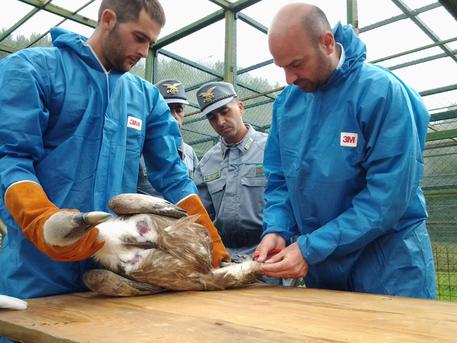
(ANSA) - L'Aquila, September 18 - Four adult griffon vultures have been released into the wild in the central Abruzzo region as part of a project to reintroduce the Old World vulture into the mountainous area, the state forest corps (CFS) said Thursday.

The release takes to over 180 the number of specimens that now populate the region as a result of the CFS's Griffon in Abruzzo Project, which this year marks 20 years. The expanding griffon vulture population is centred on the region's national and regional parks, but specimens can also be spotted in neighbouring Marche, Lazio and Molise. The first griffon vultures were imported to Abruzzo from Spain in 1994 when Sardinia was the only Italian region that could still boast a population. The news of the repopulation comes after three beached sperm whales died on the Abruzzo coast and a rare Marsican bear was shot dead in the Abruzzo countryside last week. 

Armani denies contact with Ferrari over luxury hub

Designer sides with 'yes' camp in Scottish independence vote


(ANSA) - Milan, September 18 - Fashion designer Giorgio Armani on Thursday denied having been approached by sports car manufacturer Ferrari and its parent company Fiat over plans to create a hub for luxury Italian goods, athough he said he was not opposed to the idea per se. "It is clear that my situation generates a great deal of curiosity, it is fairly unique," said 80-year-old Armani, whose brand turns 40 next year. "I have been the object of much flirting, but not from Ferrari," he continued, speaking after the presentation of his Emporio spring-summer 2015 collection at Women's Fashion Week underway in Milan. "Not that I am against them getting in touch with me," concluded Armani.

Separately, the designer told journalists that if he were Scottish he would vote for independence in today's referendum. "I cannot not make a clear stand," Armani said. "A Scotsman is a Scotsman," he added. 

The 1970s are in the air at Gucci and Alberta Ferretti

Spring-summer 2015 women's collections showcased in Milan


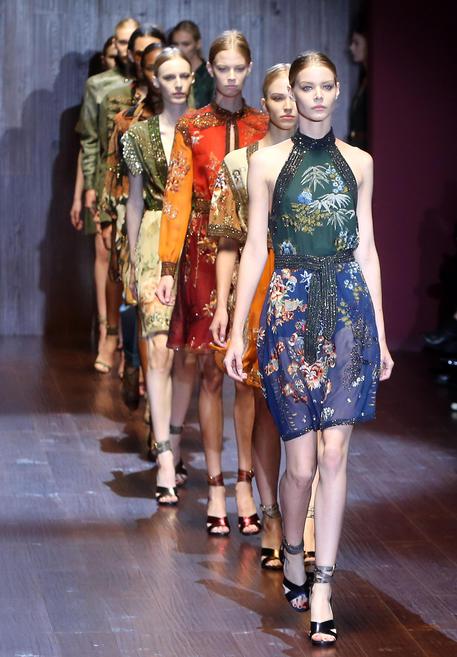
(ANSA) - Milan, September 18 - Gucci's Frida Giannini tapped into the 1970s to showcase what she described as a "very contemporary and cosmopolitan woman" on the first day of the spring-summer 2015 women's wear shows in Milan. The era showcased Wednesday was a Gucci heyday and, after last season's swing through the 1960s, Giannini turned for inspiration to the glamour of two icons - Ali MacGraw and Jimi Hendrix, who were at the center of the 'mood board' shaping the collection. This time, however, she gave her vintage inspiration a contemporary spin by emphasizing the quality of handiwork and the edge of clean lines and patterns that have made the brand's take on everyday luxury desirable for decades.

Patchwork patterns were a trademark of Gucci's prints, which the designer used for crepe de chine dresses. The vintage feel of boho print dresses was highlighted by gilets in deluxe patchworks crafted from a mixture of furs including fox, goat and Mongolian lamb. Oriental-style dresses with precious embroideries and Mandarin collars oozed understated elegance. Dazzling gold marine buttons made a statement on slim-fitting, button-through A-line dresses and skirt suits.

The quality of the glove-leather and suede or the broderie anglaise inserts used for the collection's dresses brought sass to the 1970s silhouettes. Giannini's beloved blue denim shaped cropped culottes - a must over the next couple of seasons - and dresses with statement shoelaces plunging down a neckline. Laces also crisscrossed up the sleeve and over the shoulder on white and bottle-green dresses. Marching band jackets in blue and green with gold braid trims worn over a shirt and jeans successfully reworked the uniform details with boho vibes. Hemlines were short, taking floor-skimming evening gowns off the agenda for now.

Accessories, notably stacked heel suede boots and leather saddle bags in antique tan, gave the couture workmanship of the collection a relaxed quality. And the spirit of the 1970s was also in the air at Alberta Ferretti, whose spring-summer collection was rich in craftsmanship yet sublimely ethereal. Nymphs in sheer blush colored gowns with petal appliqué had a bohemian feel as did suede fringed gilets and shifts. Accessories included hippy sandals and crocheted moccasins. Ferretti worked her trademark romantic take on femininity in nude-tone chiffons and mousselines shaping slip dresses, jumpsuits and floor-length gowns.

The workmanship in a number of the collection's pieces was intricate yet never weighed down the lightness of clothes, like a strapless dress with flowered vines made from paillettes. Pocahontas made an appearance on the catwalk with tan, ankle-grazing waistcoats with whip-stitching as well as in tan-colored fringed dresses with floral appliquè - showcasing that all-Italian craftsmanship that always gets a share of the limelight at Ferretti. Edgier looks included a fringed shift in lilac suede and a denim skirt and pants with laser-cut flowers. Overall, it was the bohemian side of the 1970s that oozed through part of the collection - a vintage tune for a new take on Ferretti's masterful interpretation of femininity, tailored to suit any occasion on a woman's agenda. 

UniCredit among Italian banks borrowing billions from ECB

Eurozone banks take up 82.6bn euros in ECB TLTRO loans


(ANSA) - Rome, September 18 - UniCredit and Intesa Sanpaolo were among the Italian banks to take advantage Thursday of a new targeted lending program, borrowing billions of euros in inexpensive loans from the European Central Bank (ECB) on condition they pass the cash on via loans to business and consumers. A spokesman for UniCredit said the bank, which borrowed 7.75 billion euros, will likely participate again in December when the ECB is next scheduled to offer loans under its new targeted lending program called the TLTRO.

Intesa Sanpaolo borrowed four billion euros and the ECB has said banks will receive the money September 24. Overall, 255 commercial banks in the eurozone took up 82.6 billion euros from the ECB as part of the TLTRO program that aims to push cash into European economies through increased loans.

Thursday's four-year loans were offered at rates of just 0.15%, but analysts said that the number of banks participating was lower than expected and these took up less cash than anticipated. Some may be waiting until the December offer and also may want to see what other measures the ECB has in mind to kick-start the sluggish eurozone economy, analysts said. The eurozone's third-largest economy, Italy, has fallen into its third recession in six years with reports of deflation last month.

ECB President Mario Draghi announced the TLTRO plan in June, with the central bank planning to conduct eight such loan operations by June 2016. The TLTRO builds on an earlier long-term loan program offered by the ECB, which is also planning to purchase asset-backed securities and covered bonds to try to inject more liquidity into the eurozone economy to stimulate growth.